
Precision Micro Magnets – Neodymium Micro Magnets
When you’re buying micro magnets for production, “tiny” isn’t the hard part—repeatability is. Our micro neodymium magnets (NdFeB) and other neodymium micromagnets are built for designs where a few tenths of a millimeter changes fit, field, and yield—compact sensors, micro actuators, microrobotics, and lab-to-pilot builds. Share your drawing and stack-up, and we’ll help you lock OD/ID/thickness, coating build, and magnetization—then validate with samples before you commit to volume (often listed as a micron magnet or mikro magnet in EU docs).
Material: Neodymium, SmCo, Alnico, Ferrite
Minimiun Wall: 0.15mm (150 µm)
Minimium Size: 0.2*0.2mm (200 µm)
Minimum tube: 0.38*0.14 *2 mm
(Note: For smallest neodymium magnets, feasibility depends on geometry, coating thickness, and handling yield. Send your drawing + quantity + coating requirement, and we’ll confirm manufacturability and a realistic tolerance window before sampling.)
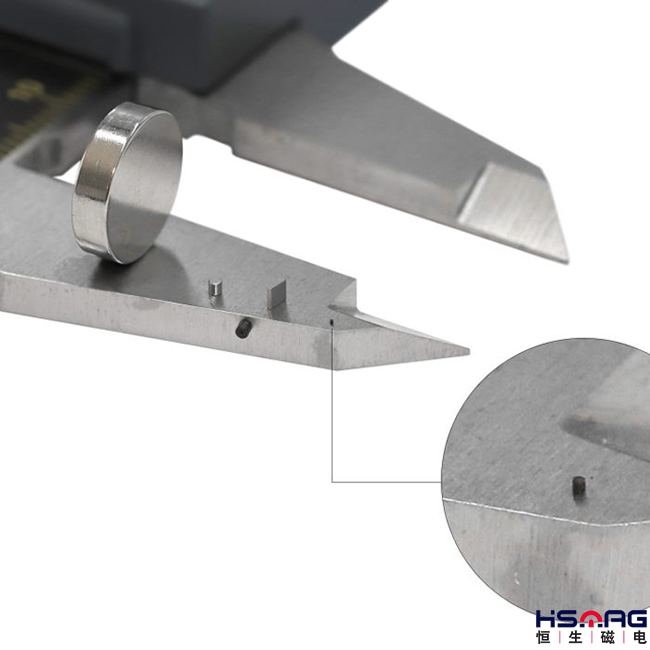
Precision Micro Magnets – Neodymium Micro Magnets
What is Micro Magnet
Micro magnets are ultra-small permanent magnets where tolerance and coating build directly change fit and field, so they’re part of the functional spec—not a “nice-to-have.” For clarity, we use:
• Small magnets: 0.80–15.00 mm
• Micro magnets: 0.20–0.79 mm (200–790 μm)
In this range, most teams choose NdFeB for strength-to-volume, but your real limiter is usually handling yield + coating uniformity + air gap in the stack-up (often called a micron magnet in research notes, or mikro magnet in EU documentation).
Features of Micro Magnets
Built for production: repeatable dimensions, coating control, and consistent magnetization for micro magnets and micro neodymium magnets
Common shapes: disc, block, cylinder, ring, tube, ball (custom micro forms available)
Grades: N35–N55, plus temperature grades on request when heat is a risk
Coatings: NiCuNi / Zn / Epoxy / Parylene options (coating build affects final OD/ID)
Packaging for assembly: trays, tape-and-reel, or custom fixtures for pick-and-place
Micro-part reality: brittle material—specify handling, cleanliness, and inspection needs early
Measurement Unit
Most RFQs for micro magnets use mm, while research notes may call them a micron magnet in μm. Either is fine—but always specify magnetization direction on the drawing. In micro assemblies, one wrong assumption (like treating the last dimension as the magnetization axis) can turn a “perfect sample” into a field-direction mismatch at build stage.
Minimum Dimensions of Micro Neodymium Magnets
Osenc can produce micro magnets with the dimensions below as a custom magnet supplier.
Minimum block: 0.2*0.2*0.2 mm
Minimum disc: 0.2*0.2 mm
Minimum tube: 0.38*0.14 *2 mm
Tolerances: between +/- 0.005mm and +/- 0.020 mm
Minimum hole diameter: 0.10 mm
If you’re working with ultra-thin parts (for example, 50 × 50 × 0.2 mm), we’ll confirm flatness, coating uniformity, and packaging to reduce cracking and chipping during transit.
Grades of Micro Magnets
Neodymium grades (N35–N55) describe material capability, but they don’t guarantee performance once your assembly adds coating, adhesive, housings, or any air gap. For micro neodymium magnets / neodymium micromagnets, volume is so small that many builds start at N52–N55 to keep usable field after losses. If heat is possible, prioritize a temperature grade first—because avoiding irreversible loss matters more than chasing the highest N-number.
Coatings of Micro magnets
NdFeB micro magnets can corrode quickly in humidity or salt exposure, so coating should be treated as part of the spec—not an afterthought. Common options include Nickel, Zinc, epoxy, Parylene, selected based on corrosion risk and wear. For smallest neodymium magnets, coating thickness isn’t “free”: it changes effective OD/ID and can become a real air gap in your stack-up. If you’re tolerance-sensitive, confirm coating type, thickness target, and how thickness is measured before sampling.
What are micro magnet use for?
Micro magnets are used when you need reliable magnetic force in a very small space—for sensing, holding, positioning, or actuation in compact products. They’re common in electronics, medical devices, precision hardware, and small mechanical assemblies where every millimeter matters.
Sensors & detection: Hall sensors, reed switches, proximity/position sensing
Micro motors & rotors: small BLDC motors, encoders, magnetic coupling
Fastening & latching: tiny closures for cases, covers, doors, lids
Alignment & positioning: jig fixtures, precision locating, repeatable docking
Electronics & connectors: magnetic charging tips, pogo-pin alignment, cable ends
Medical & lab devices: small instruments, disposable cartridges, microfluidic fixtures
Consumer products: earbuds/headphones, phone accessories, wearables, small gadgets
Modeling & crafts: miniature parts, hobby builds, prototyping
Industrial fixtures: pick-and-place aids, holding small metal components during assembly
Where to buy micro magnet?
To quote micro magnets accurately (and avoid spec mismatches), please send:
Drawing + quantity.
OD/ID/thickness tolerances.
Coating type (and any max coating build). Agnetization direction,
Operating temperature.
Your real stack-up/air gap.
If you’re sourcing micro neodymium magnets for assembly, tell us your packaging preference (tray or tape-and-reel) and we’ll recommend the most stable option before you move into volume.
Sintered Neodymium Countersunk Segment Magnet
Customized Neodymium Ring Countersunk Magnet with 2Holes
Sintered NdFeB Block with Countersink Hole
Disc Neodymium Countersunk Magnet
N28AH High Strength NdFeB Tube Magnets
200 °C Segment Sintering NdFeB Magnets
N30UH Neodymium-Iron-Boron Magnets